How MemoHoney Works in a Normal Week
What taking it actually involves, the mechanism the formula is built on, how to run a trial that gives you a real answer, and the medication interactions worth raising with a doctor before you order.
Taking MemoHoney: One Capsule, One Fixed Point
One capsule each morning with water. Thirty capsules to a bottle, so a bottle is exactly a month — not approximately one, which is a small honesty worth noting when so many products round in their own favour.
Follow the bottle you receive rather than any summary written elsewhere, this page included. Directions are occasionally revised between production runs, and the printed label is the instruction that counts.
There is no stimulant here, so nothing dictates when you take it. In practice that freedom works against you: routines without a fixed time are the ones people forget, which carries obvious irony for a memory supplement. Pick a moment already tied to something automatic and leave it there.
Taking it with food is worth doing for a specific reason covered further down this page — the niacin flush is real, harmless, and much less startling if you are expecting it.
Missed a day? Carry on. Do not double up. One skipped dose inside a routine measured in months is statistically irrelevant.
The Idea the MemoHoney Formula Rests On
Described at the level the evidence supports rather than the level a sales page would prefer.
Start with the premise
The brain is roughly two percent of body weight and takes about twenty percent of the body's blood supply. It stores almost no fuel of its own, which means it depends on continuous delivery of oxygen and glucose. Interrupt that briefly and function degrades immediately.
None of that is controversial, and the link between vascular health and cognitive health is among the better-established findings in the field. Blood pressure control in midlife appears repeatedly in research on long-term cognitive outcomes.
The nitric oxide route
Nitric oxide tells the smooth muscle in blood vessel walls to relax, widening the vessel. The body makes it from L-arginine, and the identification of that signalling role was significant enough to earn a Nobel Prize in 1998.
Supplying arginine orally turns out to be inefficient — much of a dose is broken down in the gut and liver before reaching circulation. Citrulline sidesteps that: it passes through, converts to arginine in the kidneys, and raises blood arginine more effectively than arginine itself. MemoHoney includes both, in two forms each, which is a coherent way to build for this pathway rather than a redundancy.
The energy and antioxidant components
Niacin is the precursor to NAD+, a coenzyme required for energy production in every cell. Beta-alanine raises carnosine, which buffers acidity and acts as an antioxidant in tissue. Both roles are established biochemistry rather than marketing.
What the premise does not establish
Here is where care is needed, and where most sites in this category abandon it.
A mechanism being real does not mean a supplement dose activates it meaningfully. Most research on arginine and citrulline concerns exercise performance and peripheral blood flow rather than cerebral circulation and cognition. Moving from one to the other is reasonable, but it is an extrapolation and should be labelled as one.
The same applies to beta-alanine, where the muscle carnosine evidence is strong and the cognitive evidence is thin. And niacin only helps if you were short of it, which most people in developed countries are not.
The dose problem. None of this can be assessed properly, because per-ingredient amounts are not published. Citrulline research typically uses several grams per serving. Whether a single capsule delivers anything close is impossible to determine from outside, and that limitation belongs in your decision.
How to Tell Whether MemoHoney Is Doing Anything
Most people evaluate supplements badly, then either keep paying for years out of inertia or quit after nine days. A little structure costs nothing and gives you an actual answer.
Diarise this. The refund window is 60 days from receipt, while three and six-bottle packages hold 90 and 180 days of product. Set a reminder for day 50 the moment the box arrives — that leaves a fortnight to act while a return is still possible.
Define the measure
Pick one or two specific things before starting. "Better memory" cannot be assessed. "Whether I can follow a long conversation at dinner" or "how clear my head is at 3pm" can be. Score them out of ten today, in writing.
Change one thing
Do not start a supplement, a sleep schedule and a diet in the same fortnight. Three variables at once means you learn nothing about any of them, and it makes the whole attempt far more likely to collapse.
Give it a fair run
Nutritional support works slowly. Two weeks answers nothing, and an unremarkable first month is the normal experience rather than a sign of failure. Take it daily rather than in a stop-start pattern.
Check the record, not the memory
Return to your written scores. Recollection quietly adjusts to justify money already spent — well documented, and it happens to everyone. If nothing moved, that is a real result and worth acting on.
Who Should Speak to a Doctor Before Taking MemoHoney
This formula warrants more care than most, and the reason is straightforward: vasodilation is exactly what several common medications also do. Please read this rather than skim it.
- You take blood pressure medication — effects may be additive and lower it further than intended.
- You take nitrates or any vasodilator, including medication for angina or erectile dysfunction. This combination can be genuinely dangerous.
- You take blood thinners or antiplatelet medication.
- You have had a heart attack — arginine supplementation after myocardial infarction has been studied with concerning results.
- You have herpes simplex, since arginine can promote viral replication.
- You have liver or kidney disease.
- You take medication for cholesterol, diabetes or gout, all of which can interact with niacin.
- You have surgery scheduled, or you are pregnant or nursing.
The niacin flush, explained in advance
Niacin commonly causes flushing — reddening of the skin, warmth and sometimes tingling, usually across the face and chest. It typically begins within fifteen to thirty minutes and passes within an hour.
It happens because niacin triggers prostaglandins that dilate small vessels near the skin surface. It is harmless, it usually diminishes with continued daily use, and taking the capsule with food reduces it. Arriving unannounced it is alarming, which is the only reason we have given it this much space.
Stop and seek advice if
You notice dizziness or light-headedness, unusual bruising, palpitations, persistent headaches, digestive upset lasting beyond a few days, or anything else that starts after you begin and does not settle.
What MemoHoney is not
A dietary supplement, not a medicine. It does not treat, prevent or slow any condition, including dementia and Alzheimer's disease. If you are worried about memory changes in yourself or someone close to you, that deserves proper medical assessment — thyroid problems, B12 deficiency, depression, medication side effects and sleep apnoea all present that way and are all treatable once found.
Continue with what MemoHoney supports or the full FAQ.
What MemoHoney Actually Costs to Take
One capsule a day, thirty capsules a bottle. That makes a bottle exactly one month, and it makes the per-day figure the only number that stays comparable when packages run for different lengths of time.
Six bottles works out at roughly $1.63 a day, three at about $2.30, and two at around $2.80 once the $9.99 shipping is counted. Whether that is worth it is your judgement — but make it against the real figure rather than the headline one.
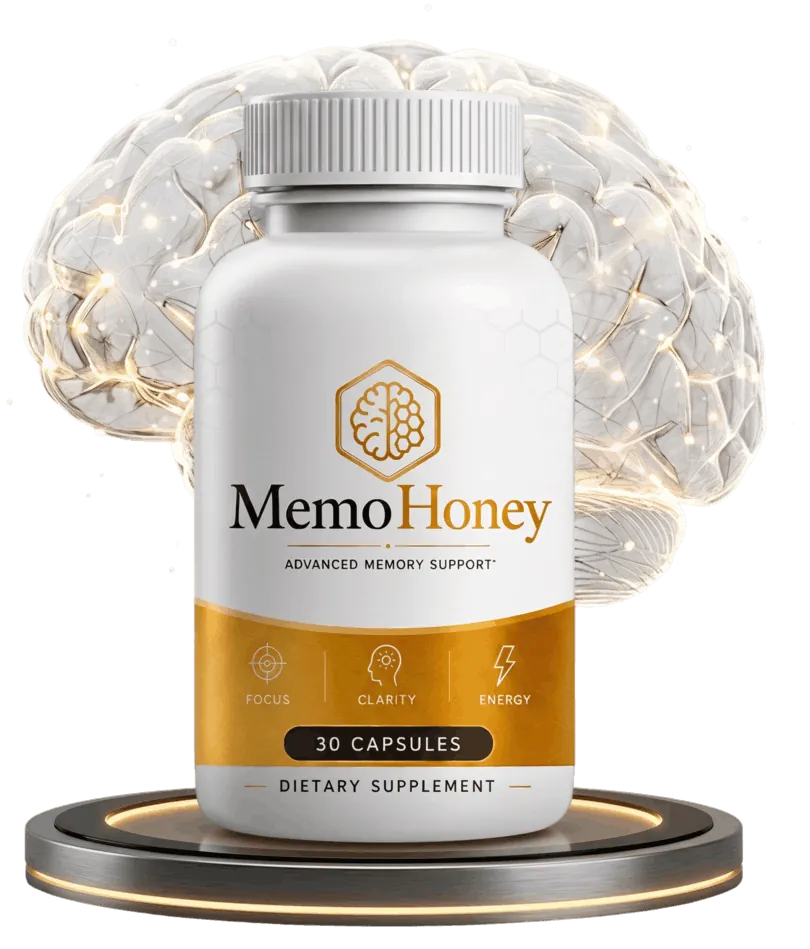
Begin a MemoHoney Routine
A daily cognitive wellness formula built around six ingredients, taken as one capsule each morning. Every package is backed by the 60-day money-back guarantee, and pricing and stock are confirmed on the official checkout.
From $49 per bottle on six · 60-day guarantee · Free US shipping on three and six